
County Magazine | July 21, 2026
Building a healthier Texas
Federal funding and local efforts aim to improve healthcare across rural communities
Across rural Texas, access to healthcare can hinge on decisions made in a county commissioners courtroom just as much as those made in a doctor’s office. For residents in small counties scattered across the plains and ranchlands, a routine checkup — or an emergency — can mean driving an hour or more down narrow, two-lane highways.
That reality has created what many local officials call a rural healthcare drought — a persistent shortage of doctors, clinics, dentists and hospitals stretching across wide areas of the state. The problem extends beyond Texas: Hundreds of rural hospitals have closed across the country during the past decade.
In West Texas, the 10 counties surrounding Lubbock only have four critical access hospitals, and five have limited health services without any hospital. One has nothing at all. Dentists, too, are in short supply, with many having to travel to Lubbock or Amarillo to find the nearest office.
Potter County Judge Nancy Tanner said these struggles in rural areas are often rooted in broader gaps in healthcare.
Counties step in where the traditional healthcare market struggles. Sometimes, that means approving plans for a new private clinic. Other times, it means expanding EMS services so ambulances can reach remote ranchland faster. In other cases, counties work with hospital districts to expand a rural hospital, build a mental health facility — or, often most importantly, simply keep an existing hospital open.
Addressing the shortcomings isn’t an easy fix, Tanner said.
“Expansion is going to be something we could do from now on to eternity,” she said. “We have to have the resources available to get people where they need to be.”
New federal investment
Local healthcare providers across Texas may soon find additional relief through the federal government’s Rural Health Transformation Program, which was authorized by Congress last year and will provide $50 billion in federal funding to states to strengthen rural healthcare. Texas will receive the largest share, about $1.4 billion over five years.
Texas has created a plan called Rural Texas Strong to distribute the federal funds, focusing on six initiatives: reducing chronic diseases such as diabetes and obesity, creating consumer-facing health portals, deploying artificial intelligence and telehealth tools to bridge service gaps, improving cybersecurity protections for patient data, upgrading equipment and capital infrastructure in rural hospitals and clinics, and recruiting and retaining healthcare workers in rural communities.
About $99 million of the total will be set aside for the last measure. This funding could be used for scholarships that help local students pursue medical careers, relocation and signing incentives for physicians and other health professionals, and new residency or fellowship programs intended to train providers in rural settings. Participating organizations would also be required to develop retention plans aimed at helping recruits build long-term careers in the communities they serve.
For Clay County, like many rural counties, workforce shortages remain among the biggest barriers to expanding access to care.
Clay County Judge Mike Campbell said the county recently received funding through a separate state program to purchase an ambulance, but staffing remains a challenge. Although the county has multiple ambulances available, it does not have enough personnel to keep all of them in service full time.
Campbell said local officials welcomed the federal investment as recognition of the challenges facing rural communities, where residents often travel long distances for care and providers face ongoing staffing shortages.
For counties already working to keep hospitals open, recruit providers and maintain emergency services, the Rural Health Transformation Program represents one of the largest recent investments aimed specifically at strengthening rural health care infrastructure and workforce capacity.
Counties take action
Long before the announcement of federal funding, Texas counties had already begun organizing and investing in innovative strategies to strengthen healthcare services in their communities.
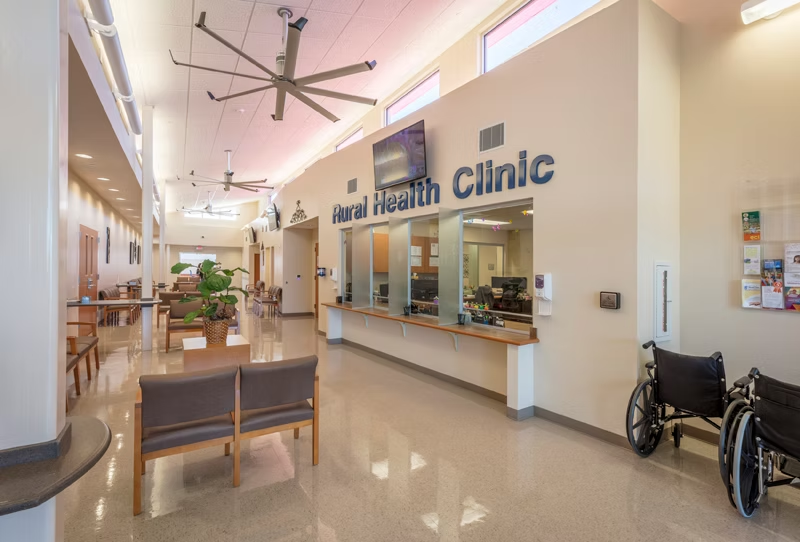
In Mitchell County, local leaders recently expanded access through a new rural health clinic serving residents in and around Colorado City.
Launched in 2013, the project was part of a broader master plan evaluating the county hospital’s future and prioritizing improvements. Representing just a phase in a multiyear plan, the expansion added several physicians, more than a dozen patient rooms, and three larger obstetrics and gynecology rooms — providing much-needed capacity for the community.
Similar efforts can be found in some of Texas’ most sparse areas.
McMullen County is among the smallest in the state, with fewer than 1,000 people. Ten years ago, they had a single nurse serving the county and desperately tried to get a private company to open a clinic in Tilden, with no luck.
Seeking a solution, in 2015 they formed a partnership with the nonprofit Atascosa Health Center Inc., which serves a five-county region in South Texas, to open a small, five-day clinic that would serve residents. Today, it is staffed with nurses and phlebotomists and takes insurance and cash payments at a sliding scale.
Atascosa Health Center provides the funding and staffing for the clinic, and McMullen County pays any overages.
State funding allowed them to expand the clinic by adding a mental health wing with a peer specialist, therapists and access to a psychiatrist through telehealth appointments.
The small facility has been a game changer for the county, where residents had to travel an hour and a half to San Antonio to get access to this kind of routine care.
“There are probably not a lot of counties with less than 1,000 people offering these services,” McMullen County Judge James Teal said. “I can’t stress enough how important it is to make partners in our communities and figure out creative ways to get the services counties need in order to provide services that are so important.”
Other counties face a different challenge: protecting the services they already have.
In Fisher and Crosby counties, local leaders and the hospital district continue working to sustain operations at their critical access hospitals, which serve populations of fewer than 5,000 people spread across more than 900 square miles. For many residents, these facilities are the only nearby emergency rooms, often requiring about an hour of travel to reach care.
Treating the whole person
Improving healthcare often extends beyond traditional healthcare settings.
In Bailey County, county staffers hold educational lunch sessions, walking challenges, CPR classes and diabetes education workshops, often with participation from EMS personnel and local health professionals, reaching both county employees and residents.
County Judge Assistant Rebecca Beall, who serves as the county’s wellness coordinator, helped champion these initiatives as a way to promote healthier lifestyles and prevent minor health concerns from becoming major medical problems. The county also emphasizes preventive care for seniors, offering foundational balance classes at the Bailey County Senior Center three times a week.
The program earned recognition during TAC Health and Employee Benefits Pool’s Healthy County Boot Camp conference in 2025.
Bell County, which is made up of both urban centers and agricultural areas, has also designed an innovative program, with a focus on indigent care. The county-run system provides services to residents who cannot afford care and focuses on clinic-based primary care rather than relying heavily on emergency rooms.
By building partnerships with local clinics and providers, the county improved access to routine care while reducing strain on local hospitals.
Bell County Precinct 2 Commissioner Bobby Whitson has highlighted the importance of the program.
“If we don’t take care of some of those in our community that are unable to take care of themselves, it becomes not only treacherous for them — and we certainly don’t want that — but it becomes a health issue countywide,” he said.
The future of Texas health
There are many challenges that lie ahead for Texas counties as they search for ways to improve healthcare in their regions.
Counties have expressed optimism about the possibilities for the future.
“Rural Texans across the state will benefit from this historic federal investment,” Texas Gov. Greg Abbott said. “We will strengthen our rural hospitals, expand access to critical mental and physical healthcare, and help reduce chronic disease through wellness and nutrition initiatives."