

County Magazine | April 30, 2026
Closing the distance
How a rural Texas county is bringing critical care closer through its air medical program
Dispatchers initially called in Robert Grisewood III’s crash as a fatality.
It was Dec. 29, 2023. A truck crossed the eastbound lanes of Wonder Hill Road to U.S. Highway 290 in Washington County and collided with Grisewood’s motorcycle at 95 mph.
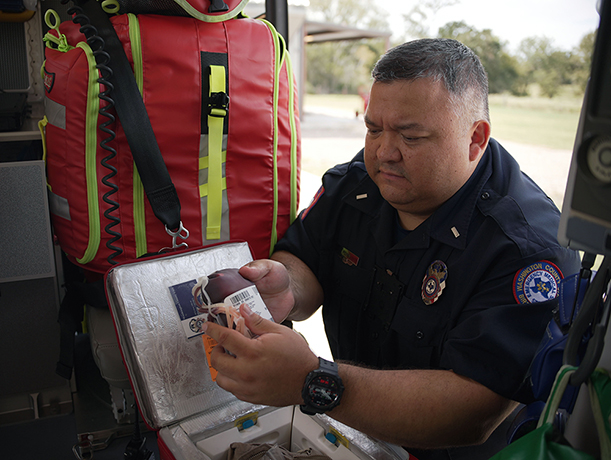
When paramedics arrived, they found him with catastrophic injuries, with one leg bent next to his head. They rushed him to a nearby EMS station, intubated him and gave him several vials of blood to stabilize him before flying him in their helicopter to the hospital in Temple.
Grisewood had suffered a traumatic brain injury, organ damage and fractures in all four limbs. Doctors nearly had to amputate an arm and a leg.
Looking back two years later, Grisewood’s mom, Echo, said she’s grateful the crash happened in Washington County, as strange as that sounds.
“After hearing everything that went on initially after the accident, how they dove into saving his life, the things they had access to and what they did to stabilize him to get him to the hospital, he wouldn’t have made it,” she said. “At the end of the day, they saved his life.”
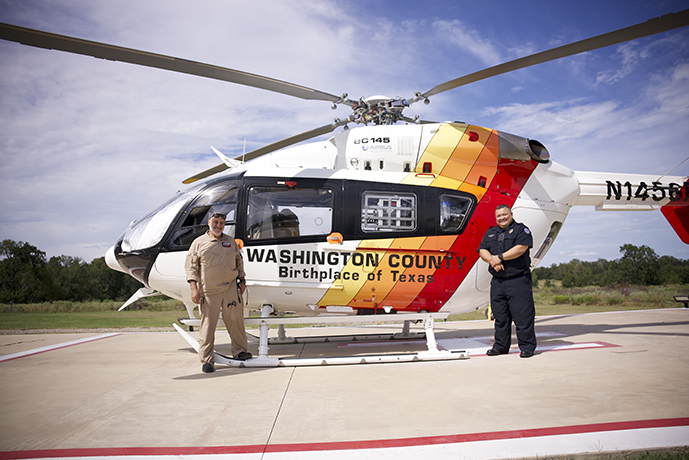
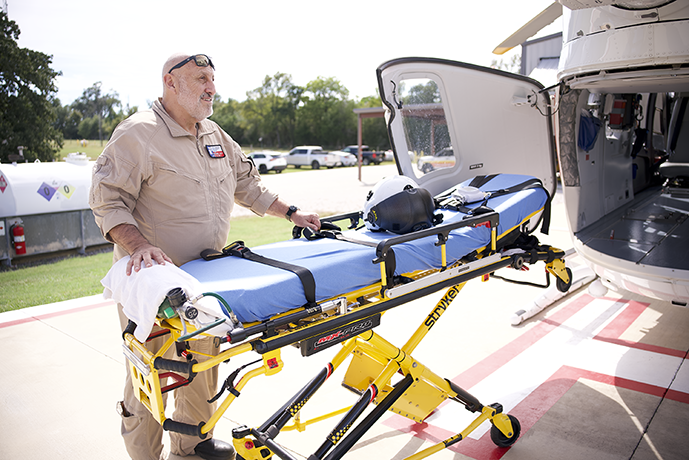
Washington County stands out for its emergency services, with a county-run air medical program rarely found in rural counties.
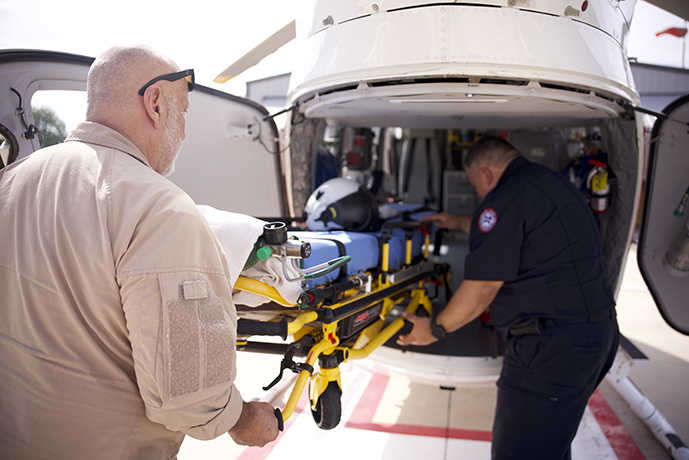
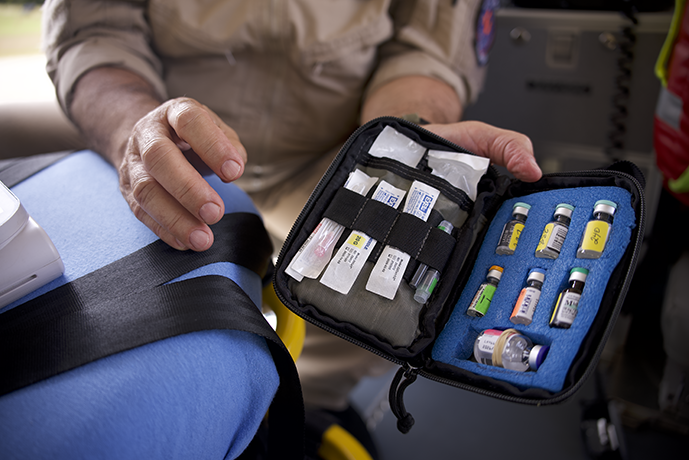
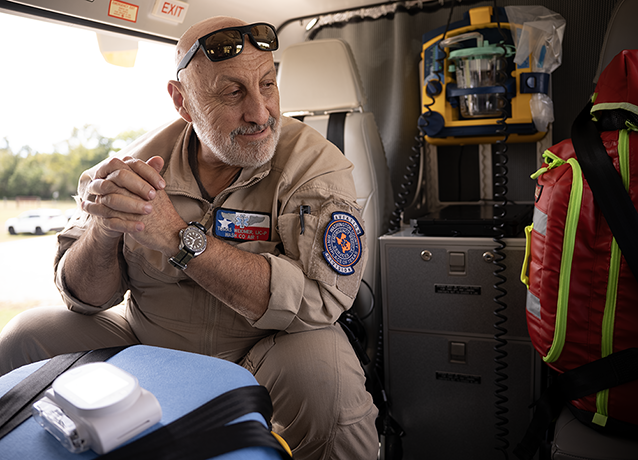
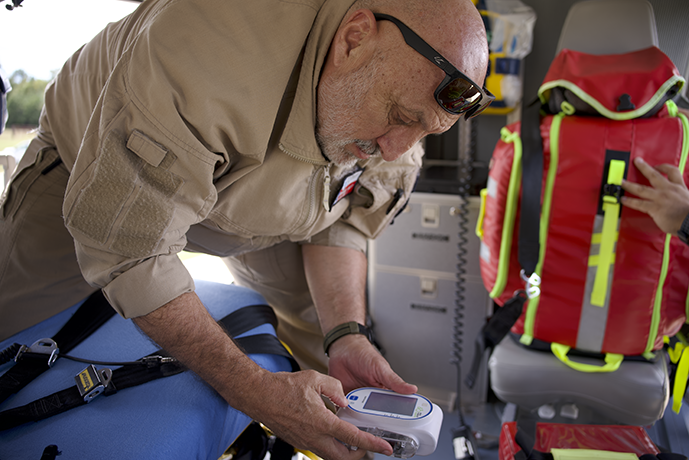
A helicopter based at the county’s EMS station is equipped with a chest compression device, ultrasound equipment, specialized medications and blood products — essentially functioning as a miniature intensive care unit in the air. Access to these kinds of resources is rare in rural areas. Less than 1% of the EMS systems nationwide carry blood products.
With these resources, Washington County can provide critical care in the air while transporting patients to the hospital. That capability is especially important in rural Texas, where hospitals are closing and Level 1 trauma centers may be hundreds of miles away.
Washington County’s air medical program allows patients to reach a trauma center in about 33 minutes from the scene of an incident. Before the program was established, transport could take as long as 90 minutes — a delay that can mean the difference between life and death.
Best practices call for patients in urban areas to reach a trauma center within 60 minutes. In rural areas, the goal is often extended to 90 minutes because of limited resources.
Bringing critical care to rural skies
When it established its air program in 2018, Washington County was hoping to change its then longer response time.
“I think the really big question was, at the time, can we do good medicine in rural Texas?” said Kevin Deramus, the recently retired Washington County EMS director who helped establish the air program.
“The top five killers of the human race are super time-sensitive things, stroke, cardiac disease, pulmonary disease and trauma,“ he said. “If you don’t have a trauma center, if you don’t have a stroke center or a cardiac catheterization lab, then you’re not going to meet the best practices.”
Typically, counties contract with an outside air medical company that supplies both the aircraft and personnel and manages billing. In other cases, counties rely on helicopters from larger cities, which can increase response times.
Washington County operates differently. It contracts with Metro Aviation for the helicopter but staffs it with its own clinical team that provides medical direction. Because the county manages both its ground and air response, crews communicate on shared radio channels and coordinate transport seamlessly.
That coordination allows medical procedures to begin immediately once a patient is in the aircraft — a key factor in reducing response times and saving lives.
The program now serves 700 square miles in Texas.
“We get a call of chest pain here, and a ground truck and aircraft respond simultaneously,” Deramus said. “It gets it spinning so much faster than calling a number of someone in Austin and saying we need your aircraft. You get 20 questions, and it takes 10 or 12 minutes to get them in the air.”
A coordinated response
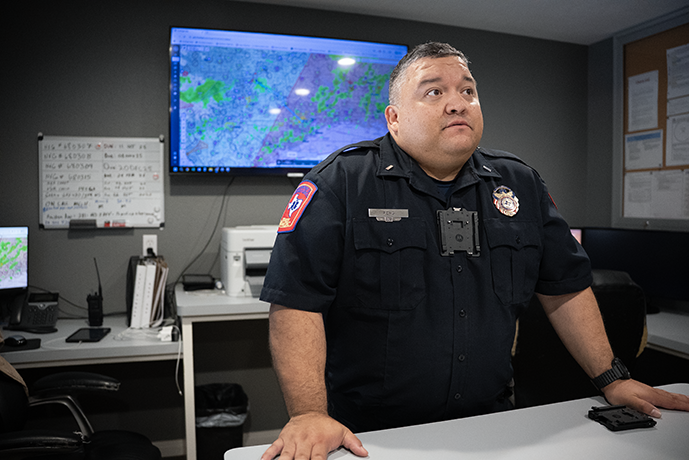
Washington County Aviation Lt. Ricky Peña said pressure can be high in the helicopter.
“When you’re at 3,000 feet in the air, and that patient is starting to crash on you, on the ground side, you could divert to the closest facility. You could get on the radio and talk to a physician,” Peña said. “Those are things that we really cannot do in the air. We don’t have time for it. That’s why we really rely on our crew to be experienced.”
All Washington County flight crews have been to critical care flight paramedic school and passed all the appropriate testing. “You’re not going be a rookie doing this job,” Peña said.
In addition to its exceptional training and resources, Washington County also offers its helicopter services to residents at no cost. After insurance pays its portion, the county covers the remaining balance that is typically billed to patients, saving residents a tremendous amount in medical expenses.
Today, Washington County is generating revenue from the program, helping offset much of its cost. Overall, the service costs the county about $1 million annually, or roughly $2.50 per resident per month.
“We’re not in this to make a whole bunch of money,” Peña said. “We just want to serve our residents. That’s our mission.”
It’s a model that potentially could be replicated across rural Texas, though Deramus said Washington County is uniquely positioned to support it because of its geography and tax base. Many retired people with good insurance have moved to the county. That may not be the case in counties with larger uninsured populations.
Now a section chief with the Texas Division of Emergency Management, Deramus has spent a lot of time traveling to counties across Texas and the country educating people about Washington County’s air program.
“We get all the positive feedback, but often times it gets narrowed down to, well, we can’t afford that or it’s too expensive, and it’s really not,” he said. “You can do some pretty cool things if you’re open-minded to it. And if any of the counties out there are interested, we’ll come talk them through it and see if there’s a way that we could help them.“
Washington County is always working to improve its program, reviewing incidents after they occur, discovering where they faced challenges and how they can fix them.
“We’re constantly learning, constantly improving, keeping each other accountable and reviewing calls and where can we improve,” Peña said.
Grisewood doesn’t remember the crash that almost killed him. He said he woke up in the hospital, and it was already 2024.
Today, he still struggles with the aftermath. His leg is stiff, and he has no flexibility in his ankle, making it difficult for him to stand for a long time.
But he remains positive.
“I really can’t complain,“ he said. “I can just move on from it. It’s life, it happens. You can either stay happy or just mope in self-pity that it happened to you.”
Grisewood still visits the Washington County EMS crew often. He has an open ticket to walk into the station anytime.
“I’m just thankful,” he said. “They are the reason I’m alive.”