

Feature Story | January 26, 2026
Dust, pavement and the price of progress
How counties in the Eagle Ford Shale banded together to address the hidden costs of the oil boom
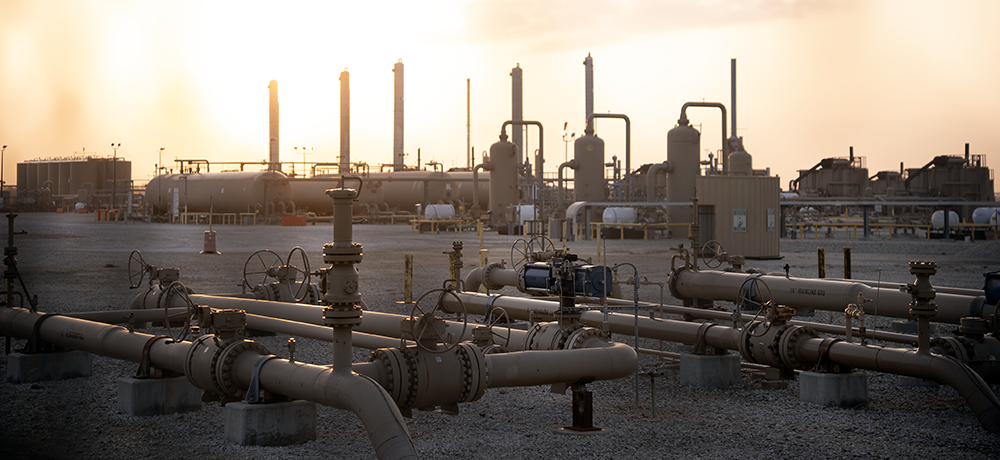

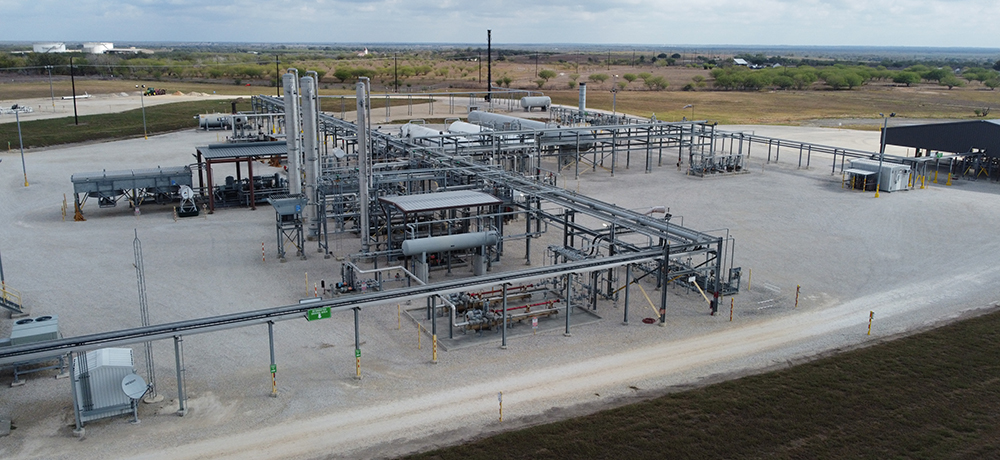
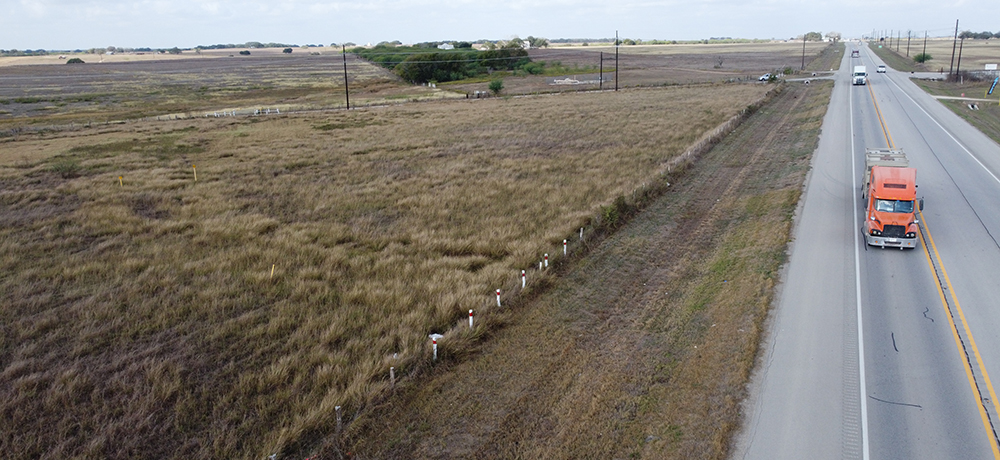

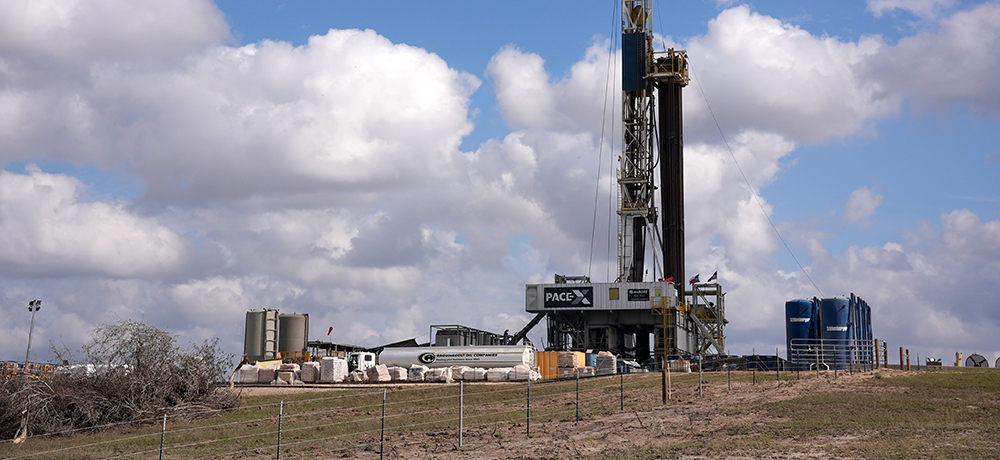

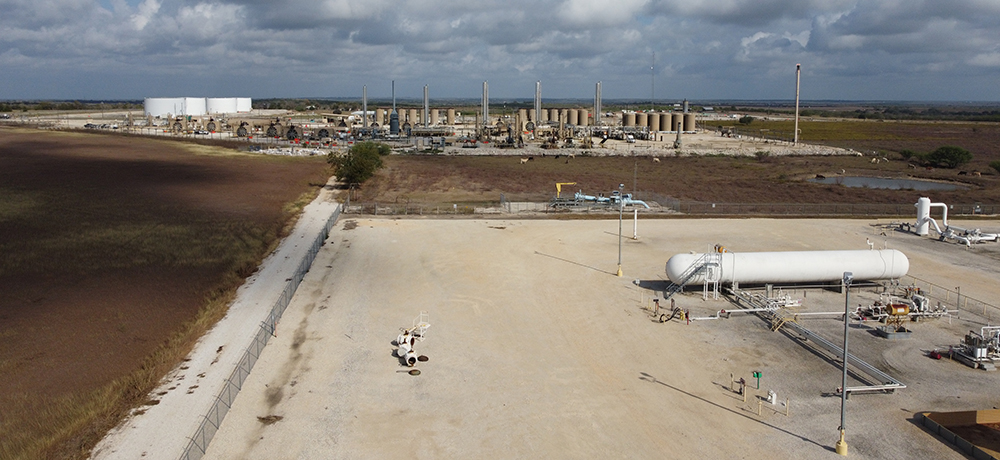
Every day, hundreds of heavy trucks traverse the roads from South Texas through the Coastal Plains up to College Station. Cement mixers, flatbed trailers, pipe haulers and pickups congest the roads, bringing materials to oil and gas wells, then hauling back products bound for Texas coastal refineries, then around the world.
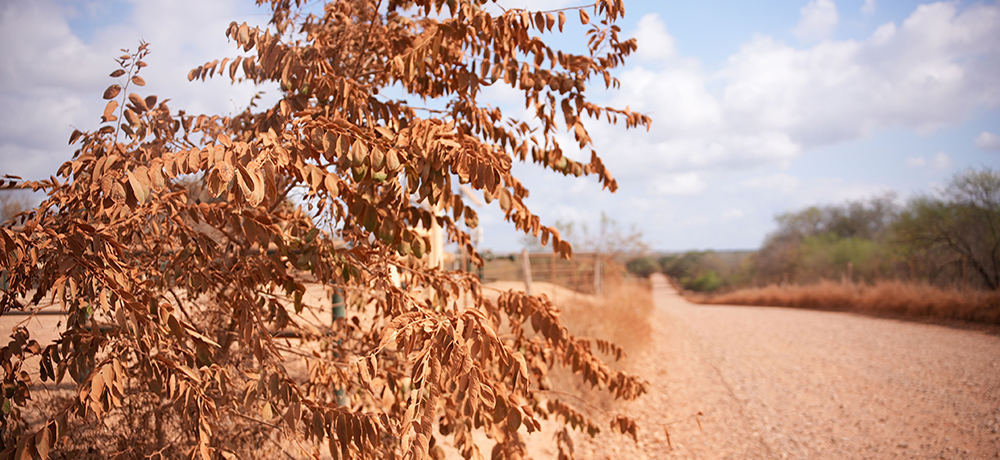
In De Witt County, the traffic is so heavy it shreds the paved roads into gravel, blowing up red clay dust that clogs the air and coats the trees a rusty orange, so it appears as a permanent fall.
It takes the equivalent of 8 million passenger cars and 20 million pounds of sand to complete and service a single well. According to the Railroad Commission of Texas, nearly 35,000 producing wells have been completed or re-entered since 2008 in this region known as the Eagle Ford Shale. As a result, the road maintenance is constant. As soon as one is repaired, it takes only about a month for truck traffic to destroy it again.
The cost adds up quickly.
De Witt County alone has appropriated $23 million annually for the past several years toward its road and bridge efforts.
“Our roads were not holding up to the heavy volume of trucks and rig movements, and our decades-old way of paying the county’s bills was facing a challenge beyond any local means we had available,” said retiring De Witt County Judge Daryl Fowler, who has spent the past two decades working alongside neighboring oil- and gas-producing counties, including Atascosa, Gonzales, Karnes, La Salle, Live Oak and McMullen, to secure state and industry funding to improve the roads.
“Great things can be accomplished by joining forces,” he said, reflecting on the work that has been done regionally. “The oil companies have come to understand that a good working relationship with local officials leads to better results. In other words, the industry knows it needs good roads to get its products to market.”
When the landmen arrived
The Eagle Ford Shale is among the most productive energy corridors in the U.S., composed of hydrocarbon-rich rock accessed through hydraulic fracturing.
Before oil and gas, this region was largely agricultural, rooted in farming and ranching. That changed rapidly when companies began scouting for natural gas in 2003, inspired by the successful exploitation of the Barnett Shale in North Texas.
“At that time, the county clerk’s office, which was downstairs in our basement, was wall to wall with landmen, elbow to elbow, searching through old record books, looking for titles to land and leases and finding out who owned what in order to drill wells,” Fowler said of De Witt County at the time.
After a brief bust a few years later, new drilling technologies allowed crews to reach deeper reserves, leading companies back to low-production wells and opening the door for far more extensive operations. By the end of 2014, the Railroad Commission of Texas had issued more than 18,000 drilling permits to oil companies operating in the Eagle Ford Shale.
Today, the oil and gas industry is the lifeblood of this pocket of Texas. It has brought with it new jobs and support for schools and hospitals in the region, growing its tax base to meet increasing needs.
Fuel suppliers, hardware stores and companies selling sand, limestone and gravel dot the roads, a window into how the industry has transformed the landscape and local economy.
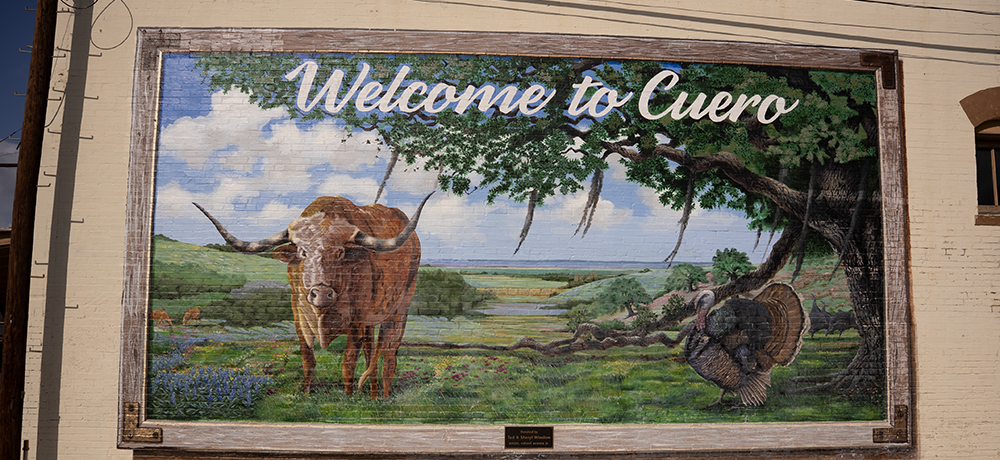
Maggie Cromeens, executive director of the Cuero Development Corporation, remembers returning home from college to a completely altered community. “There are times when I drive by our hotels today, and it’s just white company trucks,” she said. “I think that is always good, but there are struggles that come with it.”
Ripple effects of rapid development
The Eagle Ford Shale has shared the benefits and burdens of industry expansion — economic growth paired with infrastructure strain, increased traffic accidents, fires and medical emergencies, which put pressure on emergency services.
“It’s a dangerous business, and accidents happen,” said McMullen County Judge James Teal, who took office the same year as Fowler and watched the effects of the boom unfold. “There were burn victims, crushing incidents. We started to have 12 or 13 fatalities on the roadways each year, instead of the one we were used to. It stretched our EMS department very thin.”
Because of this, McMullen County had to expand its sheriff’s office and fire department, invest in new ambulances, and hire engineers to oversee construction and maintenance — all supported by property taxes levied upon mineral values on the tax roll.
A growing tax base has enabled counties to add services, including a new health center and trails in McMullen County, broadband in Cuero, expanded STEM programs in schools, Main Street improvements and a new county annex in De Witt County. These upgrades have helped keep residents rooted through better jobs and resources.
“We’ve been able to do all of that without having to raise the tax rate,” Teal said.
A legislative lifeline
Still, no amount of local revenue has been enough to keep pace with road damage. Early on, companies contributed materials and funding, but the scale of the problem exceeded what operators alone could address.
“We realized we had a problem we could not solve on our own,” Fowler said.
In 2013, Eagle Ford Shale counties banded together to seek legislative help. Senate Bill 1747, passed that year, created a statewide County Transportation Infrastructure Fund (CTIF), which awarded $225 million in grants to affected counties. Another $250 million followed in 2019.
To further address industry strains, in 2015 these counties successfully argued for a share of the mineral royalties from oil and gas produced under county roads — revenue that previously went entirely to the state because of a 1960 Attorney General’s opinion.
House Bill 2521 directed the state comptroller to establish a dedicated trust fund — outside of the legislative appropriation process — to collect oil and gas revenue derived from a county-owned right of way and distribute it back to the county of origin to be used for road construction purposes. This money allows affected counties to rebuild critical corridors with thicker limestone bases and wider lanes to safely accommodate passenger vehicles and industrial traffic. Fowler called the funding a “game changer.”
“The money that the state gave us was very well used, and it was very much appreciated,” Teal said.
The cost of keeping up
Last year, Eagle Ford Shale counties sought more state funding for the CTIF grant program, but lawmakers rejected the request. They plan to revisit the issue during the next legislative session.
“The more damage that’s being done by the oil field, the more the county is having to help, hire more staffing, get more specialized equipment,” said De Witt County Precinct 1 Commissioner Ryan Varela. “We just keep patching holes.”
De Witt County estimates it is spending as much as $1 million per mile to repair its roads.
Since the boom began, the county has spent at least $220 million on reconstruction and maintenance. During the early days, a cost allocation study estimated that it would require $432 million to build a road system that could accommodate the industry. In 2011, when Fowler took office, the county had only appropriated $2.5 million for the year for its 690 miles of county roads.
Over the years, Eagle Ford Shale counties have adopted better construction methods to build thicker roads that will stand the test of time, which comes with a higher price tag but lasts longer, ultimately saving counties money.
Preparing for a post-shale future
Following Fowler’s announcement last year that he would not seek a fifth term in office, the South Texas Energy and Economic Roundtable, part of the Texas Oil and Gas Association, recognized him for his contributions to the Eagle Ford Shale.
“He’s been a staunch advocate for our communities,” Teal said. “He spent many long nights gathering information, sharing data. My hat’s off to him.”
Todd Staples, president of the Texas Oil and Gas Association, said rural counties have much to learn from the Eagle Ford Shale counties about the power of collaboration to effect change. “There is strength in numbers when you find unanimity among leaders in a larger regional area to help give you a louder voice,” he said.
Development of the Eagle Ford Shale is expected to last another 18 years before the wells dry up, but new technology is being developed that could extend that lifespan.
“The world’s energy needs are growing, and the need for oil and natural gas is going to continue for decades,” Staples said. “I think the Eagle Ford Shale will be active for many years into the future and continue to contribute positively to the region’s economic needs, jobs and revenues to the counties and cities.”
County leaders have been thinking long and hard about what comes next, whether the industry expands or disappears altogether.
Texas is replete with abandoned oil fields, deteriorated equipment and eyesores left behind when the wells are depleted, Fowler said. “We know it’s going to come to an end someday, so hopefully we have a road system that can survive for decades if we fall back to the agricultural economy that we had before the oil boom began,” he said.
For now, De Witt County, like others, is building its financial reserves to offset the tax rate volatility swings of the oil and gas economy and the tax revenue caps embedded in the Tax Code. For Fowler, the objective is to rebuild the road system while the oil and gas assets have taxable value. Failing to do so shifts the financial burden to local businesses and homeowners who may never have benefitted from the drilling activities, he said.
“The tax base you get from oil and gas allows you to build a better community that in the future, when the industry is gone, people still want to be here,” Cromeens said. “If we keep investing in the people that we have, the quality of life, our schools, our hospitals, then long after the Eagle Ford Shale, De Witt County will still be a great place to live and work.”
From patching asphalt as part of a county work crew to elected official, De Witt County Commissioner Ryan Varela knows what it takes to keep rural roads moving. In this episode of Texas County Voice — part of our Texas County Storytellers initiative — he shares how the Eagle Ford Shale oil boom tests South Texas infrastructure, and the lessons of responsibility, resilience and service he’s learned along the way.