

Feature Story | April 29, 2026
Galveston County’s call for compassionate care
How one Gulf Coast county identified gaps in its mental health care system and worked to fill them

Licensed clinical social worker Crystal Williams doesn’t always hear what her patients hear.
During a visit, a veteran experiencing auditory hallucinations urged her not to use her phone or computer during a session, fearing the FBI would hear.
Rather than arguing, Williams calmly put her phone in her car and took notes by hand.
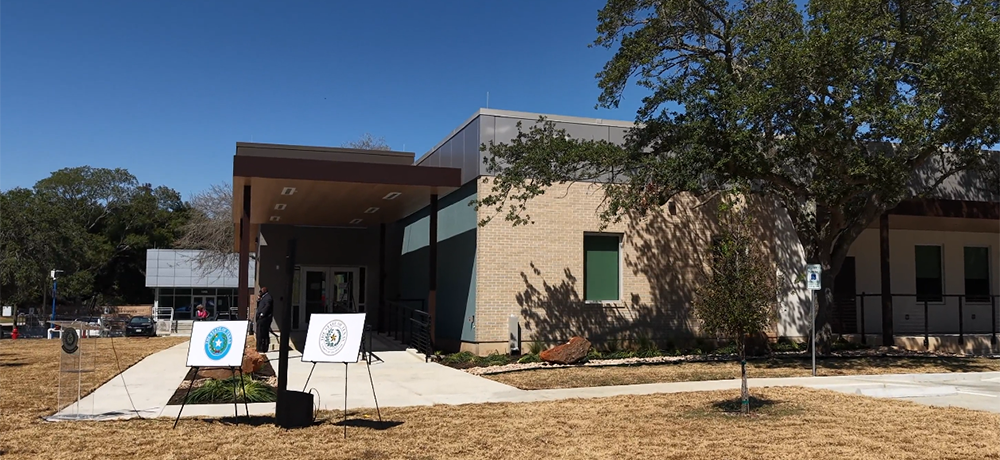
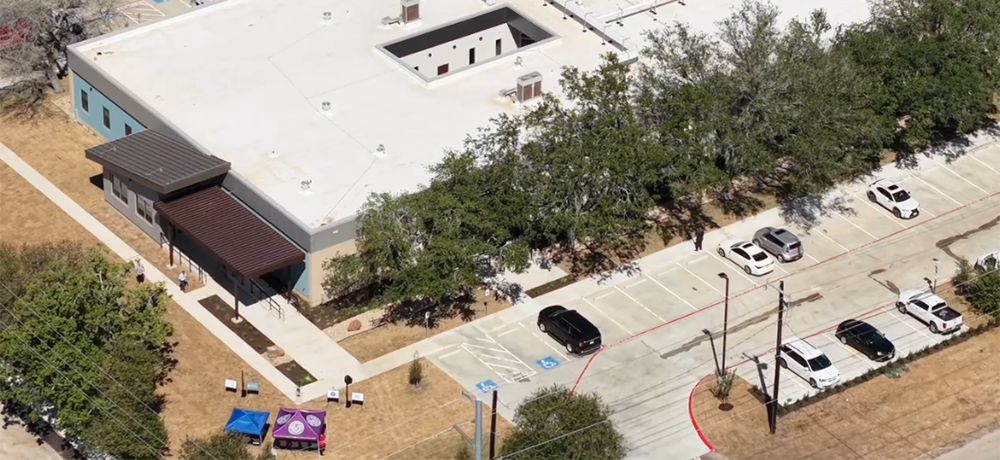
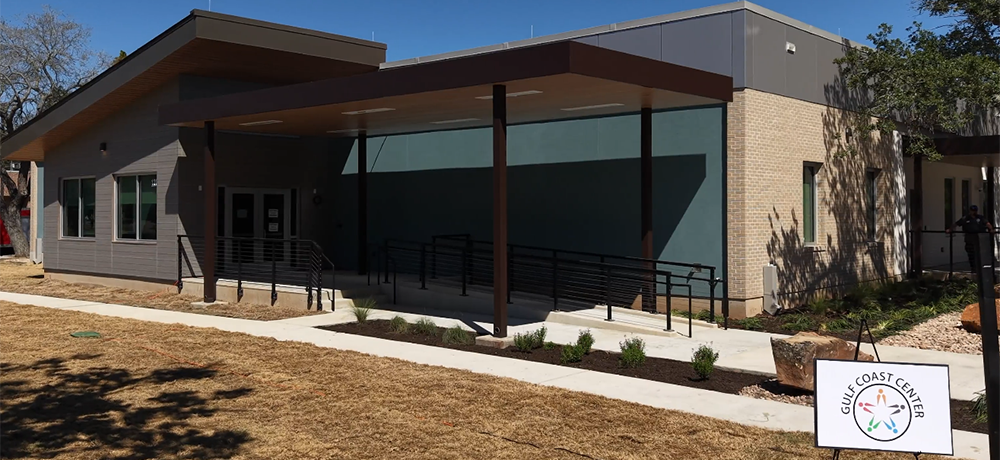
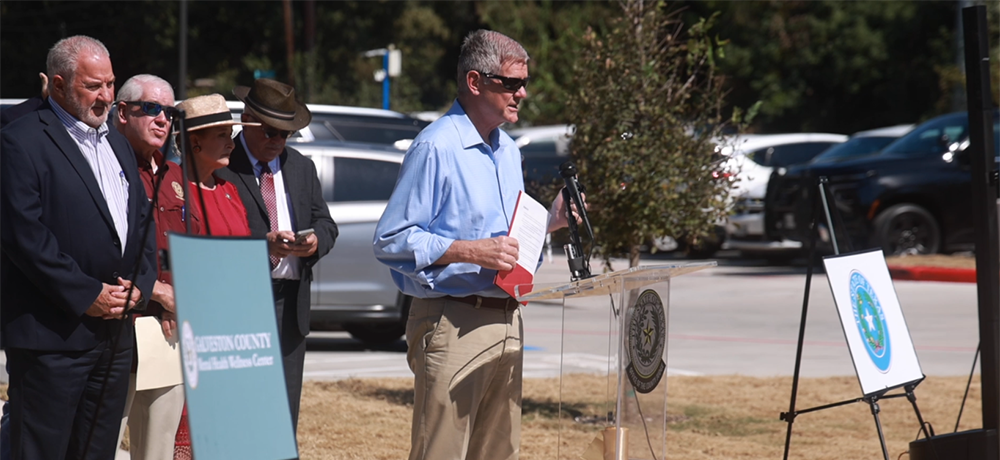
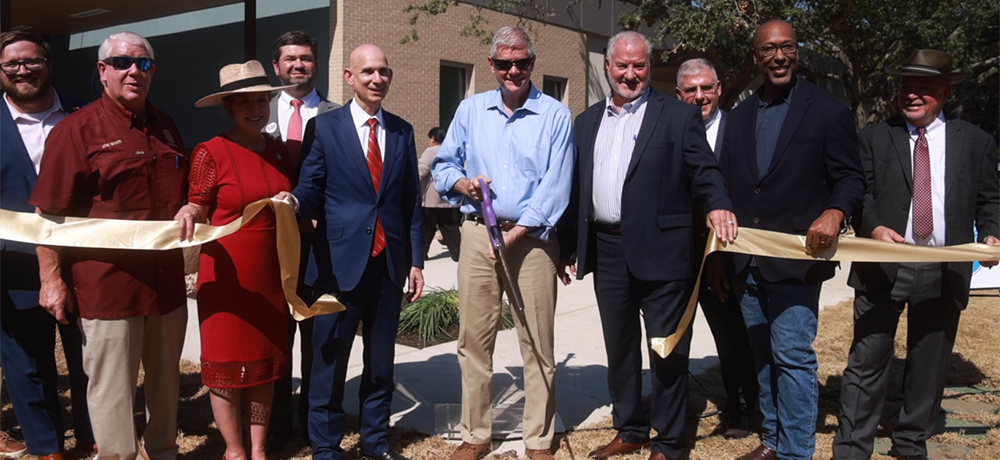
Williams’ compassionate care has guided her nearly 20 years in social work and mental health care. It has now become the mission of the new Galveston County Mental Health Wellness Center, opened in April with funding from the Texas Legislature.
That small gesture of forgoing her phone and computer during the assessment had a huge impact on the veteran’s mother.
“She was weeping because no one wanted to be patient with him,” Williams said. “It’s just so easy to say, ‘Oh, he’s not cooperating. You know, we can leave.’ But I just think it’s really important to meet the individuals where they are.”
Williams is clinical lead at the center and part of the management team leading the mental and behavioral health staff. The Legislature allocated nearly $4.5 million annually to help fund the center as part of its budget during the 89th legislative session.
The center fills a gap in mental health services that’s been missing since Hurricane Ike destroyed the University of Texas Medical Branch’s 20-bed psychiatric hospital in 2008. It also creates a hub of mental health services for the community. Before the center was built, most people needing treatment were sent to neighboring counties.
It is a problem mirrored statewide, as Texas has long struggled with a lack of mental health treatment beds, largely due to staffing shortages.
Overhauling the system
The idea for the center came out of the 2017 legal challenge, Booth v. Galveston County. The case alleged Galveston County’s bail system detained some individuals due to their inability to pay bail.
For pretrial litigation, Galveston County consulted Tony Fabelo, senior fellow for justice policy at the Meadows Mental Health Policy Institute, a nonpartisan organization that works to improve mental health care in Texas through data-driven policy guidance.
Galveston County Judge Mark Henry, who has worked in magistrate court since 2011, has seen mental health issues firsthand. He thought this case could be indicative of a larger issue, so he asked Fabelo to assess the county’s pretrial, jail, judicial and community mental health system.
At first, Fabelo was hesitant to take on the work.
“He told me no, because he did not want another government who did not actually want to do something,” Henry said. “It took a bit of convincing that that wasn’t us.”
In 2018, Fabelo delivered a comprehensive assessment. Among its chief recommendations was the formation of a coordinating council to bring together judges, law enforcement, mental health professionals and community stakeholders.
The council discovered there was a gap in care facilities. Mental health patients could go to the emergency room or an in-patient psychiatric facility in a nearby county. Often, people experiencing mental health episodes were arrested for misdemeanors, such as public indecency, and left waiting in county jails for care.
The council decided to fill that gap with the center, which offers acute care and helps keep mental health patients out of the legal system.
Felicia Jeffery, a licensed professional counselor and CEO of the center, said jails can exacerbate mental health issues.
“It’s traumatizing,” Jeffery said. “There’s a reason to have them in a jail, but that’s not the best place for care to start.”
The council identified a location for the center, a quaint blue building on Oak Street in La Marque, Texas. The county allocated almost $2 million from county funds and $12.4 million from the American Rescue Plan Act (ARPA), money given to counties during the COVID-19 pandemic, to pay for a center. However, Galveston County still needed funds to cover operating costs.
When the county approached Texas state Rep. Greg Bonnen for state assistance, he was excited to learn the county had already laid the groundwork.
“They had thought through it and knew where they were going, and it made a lot of sense,” he said. “That made it really easy for the state to then come alongside the county and partner with them.”
Bonnen said that because the facility helps fill a specific gap in care, it was easier to secure the necessary funding.
A wraparound resource
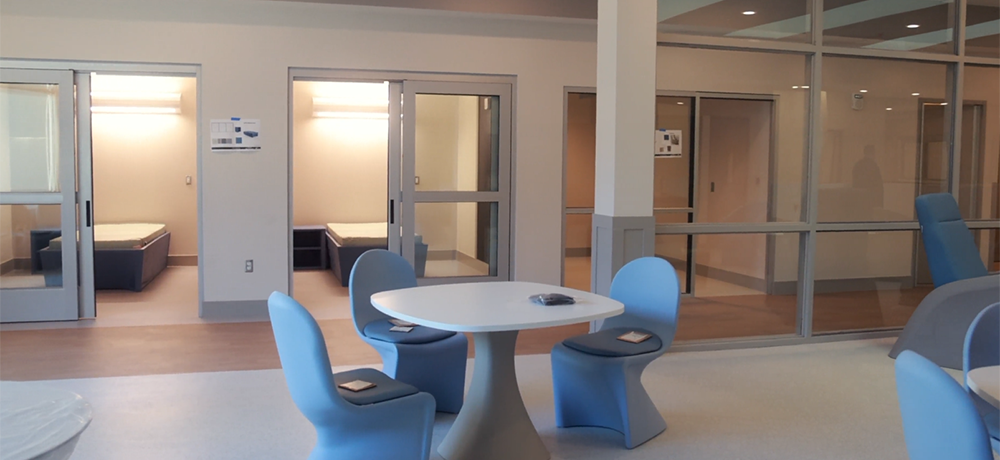
The center has an extended observation unit with nine private rooms that allows for 24-48 hours of crisis stabilization and support. It also has three 23-hour crisis stabilization beds and a 12-bed crisis respite center, where patients can voluntarily stay for up to two weeks to stabilize, develop service plans, and connect with outpatient resources.
The center’s design reflects its purpose. Soothing, warm light casts a soft glow over the common areas. Each room is named after a body of water, a subtle reminder that calmness can exist during moments of turbulence.
“It’s not just two beds that are right side by side,” Jeffery said. “There’s a level of dignity because of the way that they’re arranged, the colors, the patterns on the walls, all the things that we’re doing. Everything was designed with the people that we serve in mind.”
The center created a single point of entry for care that has historically been fragmented. Here, patients can receive psychiatric evaluation, medication management, crisis-focused therapy and supportive services.
“At Gulf Coast Center we have a saying: We don’t come to work, we come to care,” Jeffery said. “So, care is in our DNA. We live out our values every day.”
The goal is simple: No one leaves without a plan.
As a certified community behavioral health clinic, the center provides care coordination as a core service. That means discharge planning begins the moment a person walks through the door, not the day they leave. Dedicated care coordinators build daily connections with community partners, ensuring patients have access to housing, identification documents, employment support and outpatient treatment before they transition back into the community.
“We’re a wraparound resource ourselves,” Jeffery said. “But we also work with our community partners.”
The center works closely with other community partners such as the Family Service Center of Galveston County to connect families with counseling. The center also partners with the University of Texas Medical Branch in Galveston for medical collaboration and plays an active role in local housing efforts — even chairing the community housing committee. Staff members coordinate with area hospitals and work inside the county jail to identify inmates who can be diverted into care.
Changing hearts and minds
For Galveston County law enforcement, the center serves as a dedicated drop-off location for people experiencing a mental health crisis, rather than emergency rooms and jail cells.
This meant that Galveston County Sheriff Jimmy Fullen had to change the way all sheriff’s deputies approached mental health calls. When he took over in January 2025, eight deputies were office-bound during mental health situations.
“I didn’t think that was very wise,” Fullen said. “They needed to be out in the field.”
Now, there are 100 sheriffs who’ve gone through the 30-hour training for their mental health certification. Fullen said the training can help prevent a person who is going through a mental crisis from getting additional criminal charges during the call.
“The crime comes in when you’re trying to deal with him,” Fullen said. “In the past, before you know it, there’s an argument, a fight ensues, and then the deputy ends up having to take him into custody.”
Many patients’ first interaction with the county is through the sheriff’s office, then in the courtroom.
“For probably about as long as I’ve been in office,” Henry said, “it doesn’t take long to see the revolving door of mental health cases, but the jail’s the wrong place for them. I don’t think anybody argues that.”
Fullen said he’s seeing the results of the training.
“A good friend of mine, her son is mentally challenged and had six or seven incidents where they’ve had to deal with deputies that resulted in him going to jail.”
He said his friend recently thanked him because the deputy worked with her son, which kept him out of jail.
“Having a mental episode is not a crime. It’s an illness, and now that our deputies are trained, they’re starting to deal with that,” Fullen said.
The project also inspired the creation of two multidisciplinary response teams of police working with clinicians in Galveston and League City to better intervene to help people in crisis and divert them from the jail or emergency rooms to the center when needed.
When law enforcement brings people to the center, Williams said it’s their mission to reduce stigma and provide compassionate care.
“I’m also in recovery, meaning that I suffer from anxiety and depression,” Williams said. “Knowing what it’s like to not only receive services, but also provide services, I think is really important.”
Written by: Elissa Regulski and Angela Maldonado
In the latest episode of Texas County Voice, we travel to Galveston County for an inside look at Gulf Coast Center, a new mental health facility helping restore critical services lost since Hurricane Ike nearly two decades ago.