

County Magazine | July 16, 2026
Recidivism: Trends, challenges and solutions
Diversion programs help prevent parolees from being arrested again
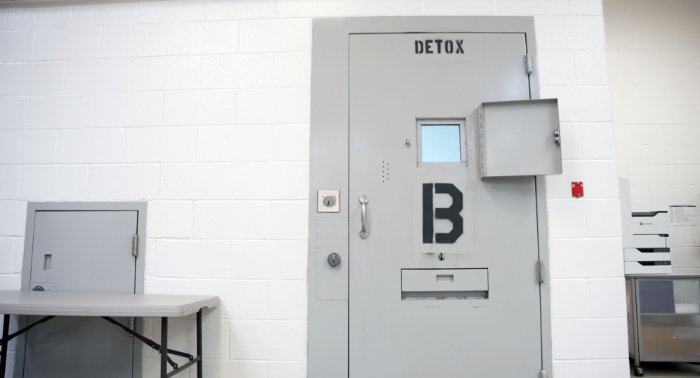
A jail cell in the Midland County Jail. (David Garcia/Texas Association of Counties)
Every year, more than 45,000 people walk out of Texas state prisons. Within three years, nearly half of them will be rearrested, and about 1 in 5 will be back behind bars. The Council of State Governments estimated in a 2024 report that Texas will spend $369 million to reincarcerate people released from prison during 2022 alone. The human cost of reincarceration is more difficult to measure but no less devastating. That is why counties across the state are working to interrupt that cycle before it starts.
Counties at the front line
While the Texas Department of Criminal Justice (TDCJ) oversees the state prison system, counties manage the critical transition points: local jails, community supervision, and the first months after someone returns to everyday life. Counties work with Community Supervision and Corrections Departments (CSCDs), which deliver substance use treatment, mental health services, employment assistance and other services.
The results are measurable. According to TDCJ's December 2025 Report to the Governor, the number of probationers sent back to prison for violating supervision terms fell by about 15% between 2015 and 2025. This positive trend highlights the success that sustained investment can have.
County programs making a difference
According to Stepping Up, a national initiative aimed at reducing incarceration rates for people dealing with mental illness, more than 2 million jail admissions nationwide are for people with a severe mental illness, with over three-quarters of those individuals also struggling with substance use issues.
These findings are consistent with what we’re seeing in Texas. In a study from the same year, Travis County found that about 38% of its jail population had a serious mental health issue, with more than two-thirds in need of substance use treatment. The county responded with a $23 million, three-year Crisis Care Diversion Pilot Program, designed to steer people away from booking and toward community-based treatment.
The early data for this program is promising. As of May 2026, within 30 days of release, 94% were not arrested and 99% did not have another mental health episode at Travis County's local mental health authority.
Williamson County’s Transformative Justice Program is another notable success. Launched in 2020, the program targets felony defendants ages 17 to 24. A Texas A&M University randomized controlled trial of 146 participants found that graduates were 48% less likely to be arrested and 61% less likely to face a new felony charge. It is also estimated that the program has saved $1,000-$2,000 in associated costs per participant.
In rural Texas, where resources are often thinner, CSCDs are finding innovative ways to reduce recidivism. Jasper and Lavaca CSCDs are jointly piloting a regional program called Journey. This program pairs trained coaching staff with artificial intelligence-supported tools to build individualized growth plans. These plans are designed to work alongside existing supervision case plans within the 10 counties served by the two CSCDs.
These local initiatives, in conjunction with county CSCDs, are essential for keeping county jail costs down. During 2025, housing a Texas state prison inmate cost $86.50 per day, while supervising someone on active parole costs only $4.69 per day. In the long run, community-based programs, even those with significant up-front costs, are a fraction of the price of reincarceration.
What comes next
The 89th Legislature provided an additional $23.2 million for treatment programs, $25 million for pretrial diversion programs, and another $23 million for employee salary raises. They also approved $900,000 for the Battering Intervention and Prevention Program. These figures clearly show that the state understands the old adage that an ounce of prevention is worth a pound of cure.
The numbers tell only part of the story, though. Behind every statistic — the recidivism rates, the cost savings — is a human being. The 45,000 Texans released from state prisons every year return to 45,000 different families, all of whom work hard to ensure that when their loved ones come home, they stay home. Counties are active partners in this effort. With renewed state investment and local innovation, Texas has tools to keep communities healthy and safe.