
County Magazine | February 03, 2026
Plotting the future
The quiet rules shaping Texas communities
In northeast Fayette County, travelers have long flocked to Round Top for its famous antiques fair — looking for fine furniture, estate jewelry and maybe a cowboy hat or two. Tents line an 11-mile stretch of highway, backed by fields of cattle and horses.
This little slice of Texas has grown rapidly during the past decade. The fair is now a massive draw. Today, when you pull into town, you’ll find short-term rental residences, retirement homes and warehouses storing found treasures.
Amid the boom, Fayette County has faced growing pains. As in many Texas counties, leaders are wrestling with how to build their tax base while preserving community character.
“You really have to find some balance of both,” said Fayette County Commissioner Clint Sternadel, whose precinct includes Round Top.
To get ahead of growth, the county is updating its subdivision regulations — encouraging development that brings jobs and creates safe, livable neighborhoods. New subdivisions can strain roads and water supplies and increase calls for emergency services. But counties, unlike cities, have limited authority to regulate growth.
Cities can pass zoning ordinances to determine what areas are designated for residential, industrial and commercial use. They can control density, require green space and designate historical districts.
Counties’ authority is largely tied to core services — ensuring safe roads, proper drainage and access to water and sewer. Developers in unincorporated areas must submit plats that show lot designs, laying out boundaries, lot lines, setbacks, easements and other features. Counties have only a short window to review and either approve, approve with conditions, or disapprove the application.
Counties act as gatekeepers to prevent lots from being sold without water access or emergency services accessibility. They can also require water supply studies, traffic impact analyses and stormwater plans. But it takes expertise to enforce these rules — something smaller counties may lack.
“If you want to regulate all this stuff, it takes money,” said John Redington, Texas Association of Counties Associate General Counsel. “You have to have staff. The county has to pay engineers. It is a significant cost policing the development.”
But it is a worthwhile investment, he said. “If you don’t do the hard work on the front end, by mandating standards for roads, drainage, and emergency access in the planning phase, it’s tough and costly to get the cat back in the bag, so to speak, because the real-world demands of the growth can quickly outpace a county’s ability to rectify substandard installations."
Fayette County is working with a law firm and studying other counties’ regulations to build a policy that fits its unique challenges.
Balancing growth and resources
Every county in Texas faces development challenges, and the issues vary widely.
In rural areas, the focus is on preserving a cherished way of life. In fast-growing urban counties, it’s congestion and infrastructure. In places like Comal County, it’s water.
Comal County lives and dies by its lakes and rivers.
When the weather is warm, people flock to the Guadalupe and Comal rivers, tubes in tow, to float lazily downstream. It’s a favorite Texas pastime, and the county depends on it. The tourism is central to its way of life and its economy.
For the people who call the area home, there’s an undercurrent of fear that one day it will dry up. And for good reason.
Comal County grew 63% from 2013 to 2023, straining water resources and raising sustainability concerns.
“You’ve got the marinas, the restaurants, the tubing outfitters, campgrounds, cabins, Airbnbs,” Commissioner Jen Crownover said. “Letting that dry up, then you’ve got an entire sector of our economy that suffers.”
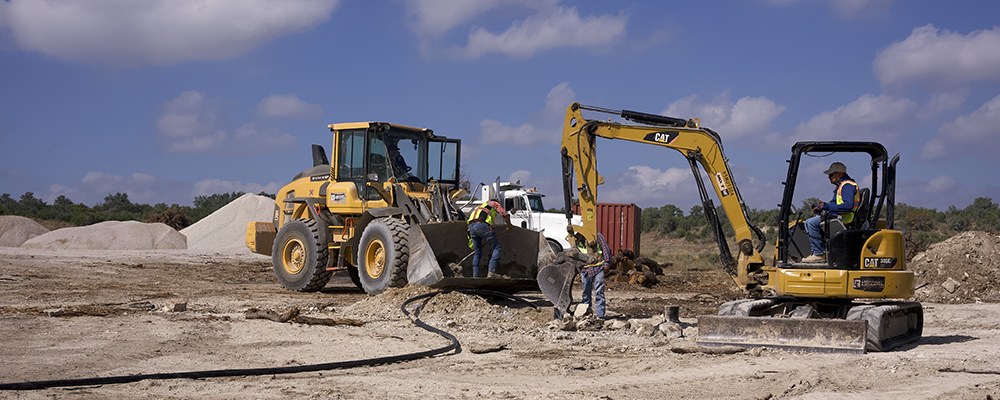
These are the downstream effects of new subdivisions. And Comal County is seeing a flood of them. A stretch of Highway 306 is basically a construction zone, with bulldozers breaking ground on new neighborhoods.
More subdivisions mean more pavement, increasing runoff and flooding risk. Schools fill beyond capacity. Roads wear down. Wildlife loses habitat. Light pollution obscures the stars of the night sky that rural residents treasure.
“You can’t put those things back, you know?” Crownover said.
For people who call rural Texas home, it’s not always what they signed up for. “When you live in a place where that’s never been an issue, and now it is, that changes a lot of things,” Crownover said. “Every legislative session, we look through all the different things that are passed to see where we can update our regulations, if there is a way to look at something differently.”
A 2023 law now requires groundwater availability studies as part of the platting process — a tool counties value. But Texas still operates under the “rule of capture,” allowing whoever drills the deepest well to gain the most water access, which benefits property owners who have the most money and resources for drilling.
“The Texas law has forever said that your only recourse if your neighbor is over-producing is to produce more,” Redington said. “We are in this time of reaching critical mass in Texas where that may not work and may leave some people without water.”
In northern Comal County, Tom McIver, a former developer, has long seen the effects of the water shortage on his family’s nearly century-old property. Just 10 years ago, his grandkids played in the creek that wound through their cypress and pecan trees. Today, the creek is dry, the pecans are dying, and even the cypress trees show signs of stress. One tree they call the Valley King still stands strong on their property, a view they enjoy from the back porch. But one day, it will be gone too, Ruth Anne McIver said.
“I’m not naive enough to think we can stop growth,” Tom McIver said. “But we are really at a decision point.”
Meeting regulatory challenges
In Webb County in South Texas, the challenge isn’t so much regulating new development as ensuring long-standing neighborhoods meet regulatory codes, which are different for areas along the U.S.-Mexico border.
These regions are dotted with colonias, neighborhoods without basic utilities such as water and electricity. Often, this is because a developer subdivided the lots and then skipped town without providing services. In some cases, families passed down land that doesn’t meet today’s standards.
La Presa, the county’s largest colonia, was built in the 1970s. Residents who request water or electricity today are denied because their lots were never properly platted — and platting requires improvements like adding septic systems that many cannot afford.
“It’s the county’s job to enforce it,” said Jorge Calderon, planning director and floodplain administrator for Webb County. “But we don’t want to put salt in the wound and go after people.”
The Webb County Planning Department provides guidance and assistance to bring residents into compliance.
Webb County has secured grants to install septic systems in some homes and partnered with the City of Laredo to extend organized water and sewer where possible. More remote colonias remain difficult to serve. A new development planned for nearby will drill wells to help supply part of the region.
“We have been pretty successful in preventing new colonias,” Calderon said. “Most developers here are good people. They know the rules.”
New industries, new pressures
Today, counties face emerging concerns — including proposed data centers that require significant water and land.
“I think a lot of counties are wanting some slight control over these industrial developments,” Redington said. “Perhaps not equivalent to city zoning, but rather some limited ability to designate where they can’t build, such as by a family cemetery or 50 feet from Aunt Harriet’s backyard.”
As Texas booms, counties are asking the Legislature for modest authority to protect what matters most — community character, essential resources and the ability to plan responsibly.
“Texas is growing so fast,” Redington said. “Counties are just trying to adjust on the fly and do what their constituents want — to protect what open space they have left and make it the best they can for everyone.