
Blog | August 04, 2026
Midland County's responsivity specialists help remove barriers to successful probation
Learn more about Midland County’s efforts to reduce repeat offenses and improve health and safety in the community in this feature article, part of Texas County Storytellers.
Community Supervision and Corrections
Department
The Midland County Community Supervision and Corrections Department (CSCD), which oversees probation in the county, offers a number of support services to remove barriers to recovery and help keep people out of jail, including access to substance abuse treatment and counseling. Specialty courts and specialized caseloads further improve outcomes. The department has seen a 23% increase over 10 years in the number of people who successfully complete probation.
One notable program in Midland County is the creation of responsivity specialists who help probationers overcome the practical and personal barriers that often stand in the way of success.
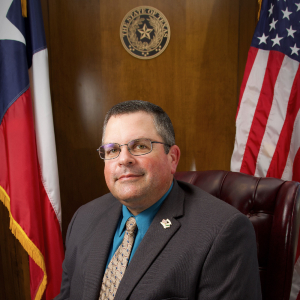
Allen Bell, director of the Midland County CSCD, says the program “changes thinking in order to change behavior."
The program is supported through the Community Justice Assistance Division (CJAD) of the Texas Department of Criminal Justice, which provides funding, oversight, training and technical assistance to 122 CSCDs across Texas. Midland County CSCD receives approximately $2.6 million annually through CJAD to support its community supervision efforts, including the responsivity specialist positions.
"Responsivity is matching the delivery of an intervention to the unique learning style, motivation, strengths and characteristics of the individual receiving it," Bell explained.
The responsivity specialists represent a slow shift in the way the state and county governments handle criminal cases. Midland County Sheriff’s Deputy John Reese reflects on this shift. He said when he started his career in law enforcement 30 years ago, he primarily focused on putting people in jail.
“It took me a little bit, but now my job is to keep you out of jail,” Reese said.
Now, all state-funded programs must be based on cognitive behavioral therapy. This approach helps people unpack the reasons behind their offences and make positive changes.
“The biggest thing that I learned about this is, what causes the problem?” Reese said. “You don't realize why people do drugs or drink a lot until you start listening to their stories.”
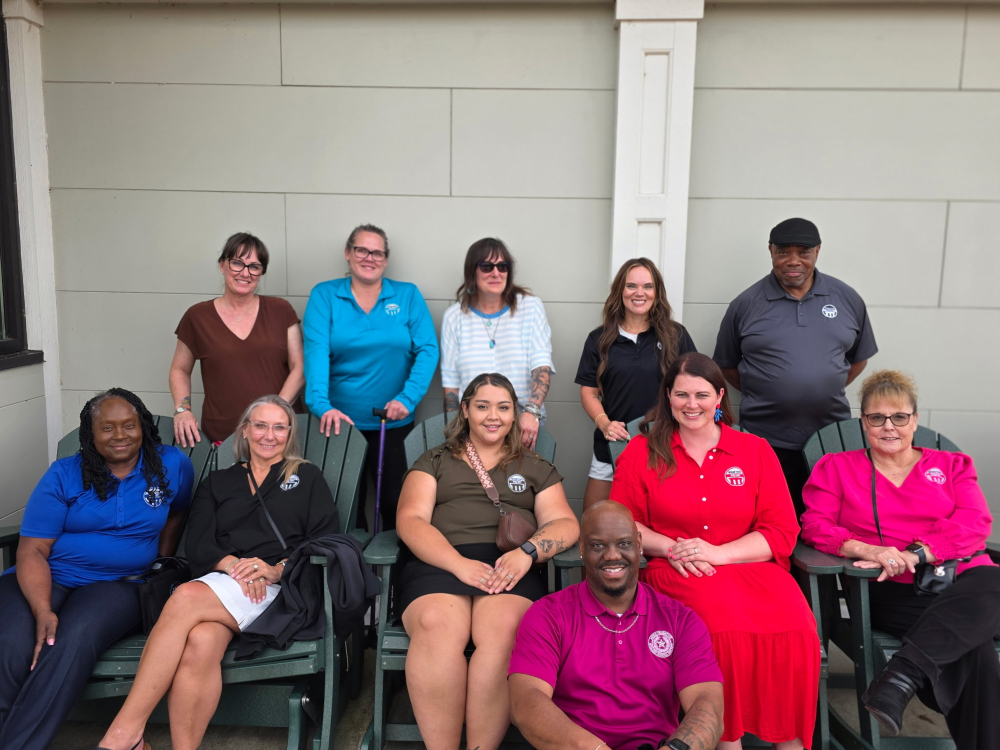
Midland County’s responsivity specialists know what it’s like to go through probation. All of them have overcome substance use issues and have lived experience with the criminal justice system.
“This gives them a unique view from the probationers' perspective of what it takes to succeed in probation,” Bell said.
That perspective helps specialists build trust in ways traditional supervision sometimes cannot. They understand the daily challenges participants face because they have experienced many of them firsthand.
"Rather than someone like me saying, 'I understand,' when I really have not seen the world from their perspective, a responsivity specialist actually has seen the world from their perspective and does understand," Bell said.
By combining evidence-based practices with mentorship rooted in lived experience, Midland County is helping more people overcome barriers, complete community supervision successfully and move toward a more stable future.
"Responsivity specialists are a success story for the probationers," Bell said.
The responsivity specialists are one example of many across Midland County where people who have rehabilitated and recovered their lives then go on to help others also succeed.
“The momentum across the community grows exponentially,” Bell said.