
Blog | April 17, 2026
Board Member Spotlight: Hon. Shay Luedeke
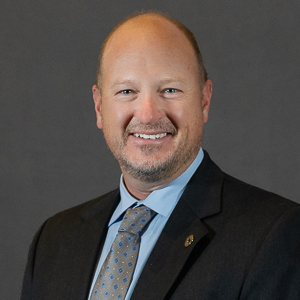
Hon. Shay Luedeke brings a technology-driven perspective to public service, shaped by decades in the private sector and a lifelong connection to community leadership. As Bell County Tax Assessor-Collector and secretary of the Texas Association of Counties Board, he focuses on innovation, efficiency and collaboration to better serve Texans.
In this Q&A, Luedeke shares how his background informs his approach to county government, along with insights on leadership, workforce development and the growing role of technology in public service.
What did you do before working in county government, and what motivated your transition into public service?
I spent about 20 years in the private sector working for small and mid-sized businesses. I graduated from Texas A&M University with a Bachelor of Business Administration in management information systems and started my career as a computer programmer. Over time, I moved into leadership roles, managing programmers, database administrators, system administrators and overall IT infrastructure.
Public service has always been part of my life. I grew up in a family dedicated to serving others — my dad was the fire chief of the Needville Volunteer Fire Department in Fort Bend County for 20 years. I joined the department as a junior member at 14 and had the opportunity to go on calls with him. That experience stuck with me.
After college, I went into the business world, but I always had that desire to serve in the back of my mind. In 2015, I learned the Bell County Tax Assessor-Collector was retiring, and the position would be open. I took a hard look at the role and realized it aligned closely with my background — administrative leadership, process improvement and a strong focus on customer service. Much of my private-sector career involved supporting customer service teams and giving them the tools they needed to succeed. It felt like a natural fit, so I ran for office — and here we are.
How has your experience as an entrepreneur and technology professional shaped the way you approach your role as tax assessor-collector?
Coming from a technology and entrepreneurial background, I naturally approach challenges with a focus on efficiency and innovation. In IT, you’re constantly looking for ways to automate processes, eliminate redundancies and make systems run smoother — and I’ve carried that mindset into county government.
I can usually spot inefficiencies pretty quickly and start thinking about how to improve them. Working in startups and small businesses also taught me how to do more with less — what I like to call having champagne tastes on a beer budget. You learn to be resourceful, to build or adapt tools, and to find creative solutions without breaking the bank.
In county government, you don’t always have unlimited resources, so that mindset is critical. It’s about thinking outside the box, leveraging technology where it makes sense, and continuously looking for ways to serve the public better and more efficiently.
As secretary of the TAC Board, how do you see your role in supporting county officials across Texas?
My role as the tax assessor-collector representative on the TAC Board is really about communication and collaboration. I help bring forward the issues, challenges and changes we’re seeing in tax offices and share that information with other board members so they can take it back to their respective associations.
There are 254 counties in Texas, and while each office operates a little differently, we’re all dealing with many of the same challenges — just at different scales. Being on the board gives me the opportunity to share insights, answer questions and help other officials better understand what’s happening in our offices.
At the end of the day, it’s about making sure we’re all informed and working together to support county government across the state.
You’ve emphasized team building and training. What strategies have worked best for building a strong county workforce?
It starts with culture. That’s the hardest part — and the most important. In government, there can sometimes be a mindset of “this is how we’ve always done it,” and changing that takes time and consistency. Culture can be like a rubber band — it will snap back if you’re not intentional about moving it forward.
I’ve found that empowering your leadership team is key. Don’t micromanage your senior staff. Set clear expectations, give them ownership and hold them accountable to results. When they feel trusted and supported, that confidence carries through the entire organization.
Recognition also matters. When things go well, give your team the credit — especially in public. When things don’t go well, take ownership as the leader. That builds trust and loyalty.
When your leadership team is engaged and positive, that attitude trickles down to the rest of the staff — and ultimately, the public feels it when they walk through the door.
What’s something people might not realize about the day-to-day work of a tax assessor-collector?
Most people don’t realize just how much interaction we have with the public. We truly are the face of county government. Every resident will visit the tax assessor-collector’s office at some point, and in many counties, we see more citizens in a year than all other elected offices combined.
On top of that, we’re managing high-volume operations while maintaining strict accountability for public funds. It’s a constant balance between customer service and compliance.
Despite the title, which can sometimes carry a negative perception, our offices are very customer-focused. On any given day, I’m talking with customers, reviewing budgets and processes, researching new technology, attending meetings, and working on ways to better communicate with the public — whether that’s through social media or other outreach efforts.
And every office is different. Some counties have a single employee handling everything, while others have large teams. But regardless of size, the mission is the same: serve the public well.
If you could give one piece of advice to county officials across Texas, what would it be?
Embrace change —don’t be afraid of it. One of the biggest barriers I see is the mindset of “it works, so why change it?” There’s always a better, more efficient way to do things if you’re willing to look for it.
Lean on your technology teams. Your CIO and IT departments have a broad view of how processes work across the county and can offer valuable ideas to improve efficiency.
At the end of the day, we’re all taxpayers too. We have a responsibility to make government as efficient and effective as possible. When we work together and stay open to new ideas, we can make a real difference.
What’s the biggest opportunity for innovation in county government right now?
Artificial Intelligence is the biggest opportunity — and it’s not going away. If implemented thoughtfully, AI can help county offices become more efficient, reduce workloads and lower operating costs.
That said, it has to be done responsibly. You can’t just jump in without guardrails. Policies and procedures must be in place to protect sensitive and confidential information.
AI isn’t here to replace employees — it’s here to support them. If we use it the right way, it can be a powerful tool to improve how we serve our communities.
What activities or routines help you stay energized?
I’ll be honest — Red Bull helps.
But beyond that, I make it a point to regularly connect with our County CIO. We’ll grab lunch once a week or every other week and talk through ideas — what I’m seeing in our office, what challenges we’re facing, and what tools or technologies might help us improve.
Those conversations are valuable. They keep me thinking forward, help me stay energized about what’s possible, and ultimately help us keep moving the office in the right direction.