

Blog | May 25, 2026
Expanding mental health care in Galveston County
When Galveston County Sheriff Jimmy Fullen took office in 2025, only eight deputies had specialized mental health training. Today, 33 deputies are certified to respond to mental health crises in the field, a shift county leaders say is transforming how law enforcement handles some of its most difficult calls.
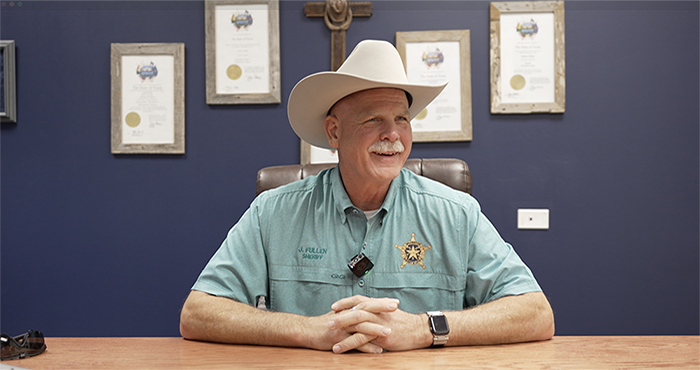
That training effort is part of Galveston County’s broader push to improve mental health care. At the core is the new Galveston County Mental Health Wellness Center, which opened in April 2026. This facility fills a gap in mental health care that was created after Hurricane Ike destroyed the University of Texas Medical Branch in 2008.

Before the center opened, deputies had few options for mental health cases. They either transported individuals to St. Joseph’s Hospital in Houston or took them to jail.
“The crime comes in when you’re trying to deal with him,” Fullen said. “Before you know it, there’s an argument, and the deputy ends up having to take him into custody.”
The process strained deputies, families and the county jail system.
“Having a mental episode is not a crime. It’s an illness,” Fullen said.
Fullen said expanding deputies’ mental health training has fundamentally changed the department’s approach in the field. Deputies learn de-escalation techniques, how to recognize signs of mental illness and how to connect individuals with treatment resources instead of defaulting to incarceration.
That training has already produced tangible results.
In one case, Fullen said a mother personally thanked him for the way a deputy handled a mental health crisis with her son.
“She said, ‘I wanted to thank you, because your deputy got out here. He clearly knew what he was doing, and my child didn’t go to jail,’” Fullen said.
Fullen believes the combination of training and treatment infrastructure should serve as a model for other counties across Texas.
“It’ll save you a lot of heartache of having to put people in jail that don’t need to go to jail,” Fullen said. “Instead, get them over to a facility where they can get the help they need.”