
Blog | July 15, 2026
Board Member Spotlight: Hon. J.D. Clark
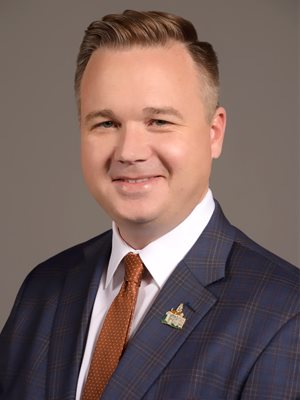
Wise County Judge J.D. Clark has built a reputation as a collaborative leader who believes the best ideas emerge when county officials learn from one another. As a member of the TAC Board of Directors and the current president of the National Association of Counties (NACo), Clark is helping elevate the voice of counties nationwide.
In this Q&A, Clark discusses what inspired him to pursue national leadership, why storytelling has become the cornerstone of his NACo presidency, and how organizations like TAC and NACo help county officials tackle shared challenges.
What inspired you to pursue a leadership position with NACo?
When I first came into county office, I engaged with NACo and immediately realized that there were a lot of resources and opportunities on the table for counties who show up. I got involved first in the Rural Action Caucus, which allowed me to learn about a lot of different policy areas through the rural lens, and that experience eventually led to me chairing the Telecommunications & Technology Committee and the Broadband Task Force. I pursued a leadership position on NACo because I have seen firsthand what it empowers counties to do, and I wanted to make sure we had a strong Texas voice and a strong voice for counties like mine at the federal table. It’s an incredible vehicle for counties to share ideas and tackle big issues together.
What are you most excited about for the County Storytellers campaign? Why is storytelling important?
Each NACo President launches a spotlight initiative for the year, and I knew that I wanted mine to revolve around storytelling. Stories cut through noise and connect people to one another. County officials have to be strong, impactful storytellers, because otherwise, people will tell stories for us -- or about us -- and often without the facts. We have to be proactive in sharing our county stories with constituents and with policy makers, because stories resonate in a way that data alone does not. It has been so exciting to see counties across the nation focus on ways to share their county stories and help educate people on the crucial role that our county governments play every single day.
How does your experience in public service inform your music? Why is it important to have an artistic outlet?
I see a lot of similarities in writing a song and communicating with the public: You’ve got about three minutes to make an impact. You have to be able to look at things from a variety of perspectives to write a song, and you’ve got to be able to do that as a county judge, too. Just like storytelling, music is one of the oldest forms of human communication that can connect people, and I enjoy the challenge of taking a big idea and distilling it into a few verses that rhyme. Everyone needs an outlet or a way to unplug, and my creative outlet is songwriting. You have to find what allows you to recharge, because that makes you a better public servant for your community.
As a TAC Board member, what do you see as the organization's biggest priorities over the next few years?
One of TAC's biggest priorities over the next few years is continuing to educate people about the role -- and the limitations -- of county government. We face growing expectations and external pressures with limited tools to respond, so it's important that both policymakers and our constituents understand how decisions made in Austin affect county operations and, ultimately, local taxpayers.
We have to carry our storytelling into the State Capitol, but we also need that storytelling to resonate in the coffee shop and around dinner tables. When Texans better understand what counties do, why we make the decisions we make, and the challenges we face, we're in a much stronger position to build trust, strengthen partnerships, and better serve our communities.
What has surprised you most about serving as county judge?
Anybody who has served as county judge will likely tell you they have been surprised by how many different hats the office requires. One moment you're discussing a transportation project, and the next you're responding to an emergency or helping a family navigate a difficult situation. The variety keeps every day interesting, but it also reminds you how deeply county government touches people's lives.
If you could help every Texan better understand one thing about county government, what would it be?
I wish every Texan received more of a civics education about what counties can and cannot do. Just like we rightly place an emphasis on our kids learning Texas history, we should want them to learn about county government because it is such an important cornerstone of Texas life and government. People are often surprised to learn about how little formal authority counties have, especially when it comes to development and growth issues. A better understanding of both the authority counties have -- and the authority they don't -- would lead to more informed conversations and stronger communities across Texas.
What advice would you give someone who is newly elected to county office?
Campaigning teaches you how to talk. Governing teaches you how to listen. Get engaged in your associations: TAC, NACo, your office’s affiliate association. We don’t know everything, but we have an incredible peer network available to us. Listen, ask, learn. The relationships you build and the knowledge you gain from other county officials won't just make you a better leader -- they'll benefit your entire county.